
Live Dream Catcher Casino UK: Format and Play
 Available in GB
Contents
A practical look at studio streaming, wheel rules, site checks, demo limits and the conditions that shape a live session.
Accessing Dream Catcher Through an Online Live Casino
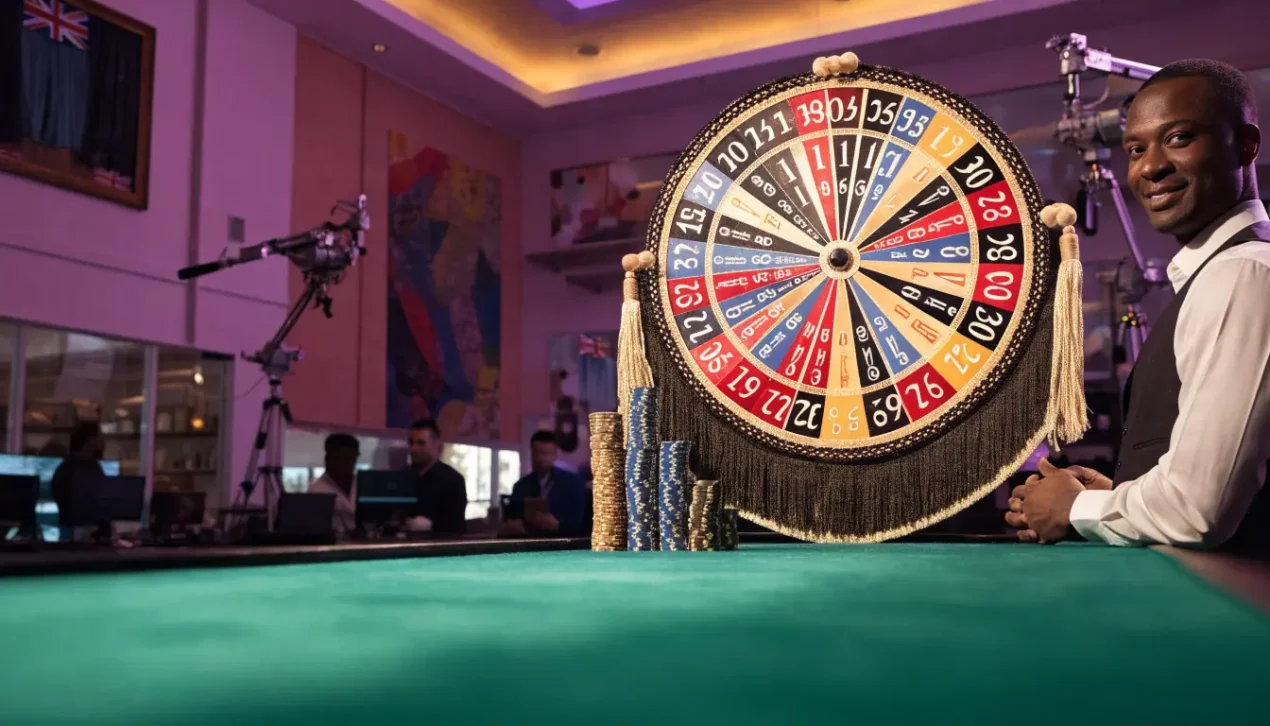
Access to Dream Catcher online is built around a live video stream rather than a fully digital game running only on the player’s device. The game is presented from a studio, where a human dealer conducts the session in real time. Bets are submitted through an on-screen interface, while the studio feed shows the live activity. The screen therefore serves two purposes: it carries the broadcast and provides the controls for participation.
That arrangement is what distinguishes a live Dream Catcher casino experience from a digital version. In a digital game, the action is generated electronically and does not depend on a dealer carrying out each round on camera. In a live casino, the dealer and studio are part of the process. The player interacts with the game through the website or app, but the action itself is streamed from elsewhere. Online access changes the location from which the session can be viewed; it does not turn the live format into an instant digital one.
A casino offering Dream Catcher may make the game available through its online live-casino area. The precise route into a particular game depends on that operator’s own interface, so there is no universal menu sequence to describe. The defining point is simpler: when the session is live, the video feed and the betting interface are presented together, allowing bets to be placed on screen while the dealer runs the game.
The stream is not merely decorative. It is the visible account of a session taking place in real time, and its pace follows the dealer’s actions. That makes a stable internet connection a practical requirement, not an optional refinement. If the connection cannot sustain the stream, the experience may become difficult to follow. A live session depends on both the video and the interface remaining usable; a connection that handles one poorly can undermine the other.
Live Baccarat Online Casinos in the UK: How It Works
This is a different set of conditions from opening a digital game that can proceed without a live video feed. Live play involves waiting for the studio action to unfold, rather than treating each round as an immediate screen response. Live games consequently run at a slower pace than digital versions. The difference is structural: a human dealer conducts the session in real time, and the online interface has to keep pace with that activity.
The trade-off is straightforward. A live stream shows a human dealer and the studio environment, but the process takes longer than a digital equivalent. That may suit someone who values seeing a real-time presentation; it may be less suitable where the main priority is rapid play. Neither format removes the financial risk of gambling. The slower pace is not a method for improving outcomes, and the live presentation does not make a bet more predictable.
Minimum bets are another practical distinction. Live games have higher minimum bets than digital versions, so the amount required to participate can be less flexible. The exact entry point depends on the game and the casino offering it; there is no single figure that applies to every live table. That makes the interface’s displayed terms relevant before any bet is submitted. The video can establish that play is live, but it does not replace the information shown in the betting area.
Red Tiger Slots at UK Casinos: What Can Be Verified
For a player looking for an online casino with Dream Catcher, the useful distinction is not simply whether the game appears in a catalogue. The session must be available in a form that can be streamed and followed, and the interface must allow bets to be entered during the live round. Availability, connection quality, pace and minimum stake all affect whether online access is workable. A listing alone says little about how comfortable the session will be under a particular connection or budget.
The phrase “play Dream Catcher online” can describe more than one kind of experience. A digital presentation and a live studio stream may carry the same game name while operating differently. The live option involves a dealer, a real-time broadcast and on-screen betting; it also brings the slower tempo and connection dependence of streamed play. Those conditions are part of the format, not temporary inconveniences that can be assumed away.
Live Dream Catcher online is access to a live-dealer broadcast through a casino interface, not an instant digital game.
A sensible assessment of access therefore starts with the conditions of the session rather than with its presentation. A clear stream is of limited use if the connection repeatedly fails, and a polished interface cannot remove the slower pace or higher minimum bets associated with live games. The practical question is whether real-time viewing and the available betting conditions fit the intended session. For a UK audience, Dream Catcher online is best understood as access to a live-dealer broadcast through a casino interface, not as an instant digital game. Gambling is for entertainment only, not financial advice.
What the Live Dream Catcher Format Means
“Live casino” describes how a game is presented, not a separate form of gambling law. The game is streamed from a studio in real time, with a human dealer, while players use an on-screen interface to place bets. That distinguishes a live-dealer game from a digital version in which software determines and displays each round without a dealer conducting it on camera.
Applied to Dream Catcher, the label indicates a live-dealer presentation of the game rather than establishing anything about its particular rules, wheel or betting options. Those details depend on the game itself and its displayed terms. The word “live” concerns the delivery of the game: a dealer conducts events in a studio and the resulting activity is broadcast as it happens. It does not, by itself, describe the odds or make a statement about how favourable a bet is.
Casino Dice Games in the UK: Formats and Terms
The distinction matters because “casino” can refer both to a venue and to an arrangement offering casino games. Under the UK’s legal framework, the label does not exempt an online product from gambling regulation. A live studio feed may look different from a conventional digital game, but the relevant question is still whether the operator offering real-money play to the UK market has the required authorisation.
The UK licensing condition
Live dealer casinos are legal in the UK when the operator holds a licence from the UK Gambling Commission. Remote operators serving the British market must hold the relevant Gambling Commission licence, regardless of where the business is based. An overseas studio or company location does not replace that requirement. The licence condition applies to the operator providing gambling to customers, not merely to the studio producing the broadcast.
This is the central legal distinction behind a phrase such as “live Dream Catcher casino UK”. A site may display a live game and use familiar casino language, but the presentation alone does not establish that its real-money service is authorised for the UK market. The relevant legal status belongs to the operator and its licensed activity. A camera feed is not a licence; a game title is not a licence either.
The Gambling Act 2005 governs gambling in England, Wales and Scotland, while Northern Ireland has a separate legal framework. For operators serving customers in Great Britain, the UK Gambling Commission’s licensing requirement applies to remote gambling. In practical terms, live-dealer presentation does not create a separate route around the rules that apply to online casino gambling. The same basic condition remains: the operator must hold the appropriate UK licence to offer the service legally.
Licensing Requirement
A live studio feed is not a licence; the operator must hold a valid licence from the UK Gambling Commission to offer real-money play legally in the UK.
That condition is about the operator’s authority to provide gambling, rather than a certification of every impression a player might form from a game’s presentation. A live dealer can make a game feel closer to a physical casino, but the setting does not alter the legal test. Nor does the word “live” mean that an online player is physically present in the studio. The player participates remotely through the operator’s service.
What the label does—and does not—tell you
The live-casino label communicates a format: real-time studio gameplay involving a human dealer. It does not, on its own, provide a complete description of a particular game. It cannot establish the rules, available bets, payout terms or the operator’s licensing status. Those are separate matters, and the label should not be treated as a substitute for them.
That separation is useful when interpreting references to Dream Catcher live casinos or a live casino Dream Catcher game. Such phrases identify the kind of offering being discussed, but they do not define one universal set of conditions across all sites. The legal requirement remains tied to the operator serving the market. The game presentation and the operator’s permission to offer it are distinct parts of the picture.
A live stream can also create a stronger sense of immediacy than a fully digital presentation. That is a characteristic of the format, not evidence that outcomes are more predictable or that the house advantage is lower. No claim about a game’s odds follows merely from the presence of a human dealer or a studio camera. Those questions require the specific game rules and paytable, not an inference from the word “live”.
Online Casino Tournaments UK: Entry, Rules and Formats
For the UK market, therefore, the meaning is straightforward but limited: Dream Catcher presented as a live casino game belongs to the live-dealer format, while legal real-money access depends on the operator holding a UK Gambling Commission licence. The two statements answer different questions. One describes how the game is conducted; the other determines whether the service may lawfully be offered to UK customers. This content is for entertainment purposes only and is not gambling advice.
Assessing a Casino Offering Dream Catcher
A casino’s suitability for live Dream Catcher depends on conditions that can be checked, not on a label such as “best”. The relevant questions are whether the operator is licensed for the UK market, whether the connection can sustain a live stream, and whether the slower pace and higher minimum bets fit the intended way of playing. These checks do not establish that a casino is best for everyone; they show whether its basic conditions are acceptable.
Start with the licence
For UK play, a live dealer casino must hold a licence from the UK Gambling Commission. That is a threshold condition, not a bonus feature. A polished page, a familiar game title or a live studio presentation does not replace the required licence.
The check should concern the operator providing the gambling service, rather than only the appearance of the site or the name displayed beside a game. If the licensing position is unclear, the casino has not cleared the first assessment. Comparing interfaces or game availability before resolving that point puts presentation ahead of a more important condition.
Attention: A valid UKGC licence establishes regulatory status but does not remove the practical constraints of live play, such as connection requirements or minimum bets.
A licence also should not be treated as evidence that the game will suit a particular player. It establishes the relevant regulatory status; it does not remove the practical constraints of live play. Those need separate consideration.
Treat connection quality as a condition
Live games require a stable internet connection. Unlike a digital game that does not depend on a continuous studio stream, a live session relies on receiving events as they happen. A connection that repeatedly interrupts the stream can make the experience difficult to follow and can interfere with the timing of participation.
Assessment therefore needs to account for the connection where play is likely to take place, not just whether the casino page opens. A site loading successfully is not the same as a stable live session. Connection quality can vary with the device, network and location, so a general claim that a casino is accessible cannot settle whether the stream will remain usable in a particular setting.
The practical standard is continuity: the game should remain clear and current enough to follow without repeated interruption. If that condition is not met, the attraction of a live presentation has limited value. This is a technical constraint, not a matter of operator reputation.
Price in the pace and minimums
Live games run more slowly than digital versions and have higher minimum bets. Both conditions affect the cost and rhythm of participation. A slower round rate means less happens in a given period than in a faster digital format, while a higher minimum bet raises the amount required to take part in each round.
Live Casino Lightning Roulette in the UK: How It Works
Those features should be considered together. A slower pace does not automatically mean lower spending: the minimum stake remains relevant each time a bet is placed. Conversely, a higher minimum does not by itself indicate poor value. It defines a financial entry condition, and whether that condition is acceptable depends on the budget set for play.
A casino should not be judged on the assumption that live play will replicate the speed or price of a digital version. If the minimum is above the intended stake, the game is not a practical fit at that table. If the pace feels too slow, the format may also be a poor match, even when the stream works reliably. Neither issue is corrected by a more attractive presentation.
Use a consistent comparison
A useful comparison keeps the criteria separate. First comes the UK Gambling Commission licence requirement. Next is whether a stable connection can be maintained for the live stream. Then come the slower pace and higher minimum bets, considered against the available time and budget. Passing one test does not compensate for failing another.
This also prevents vague claims from doing the work of assessment. Words such as “premium” or “popular” do not describe the licence position, connection reliability, pace or minimum stake. A casino can look polished and still impose conditions that make the session unsuitable. The decision rests on the terms and practical conditions, not on adjectives.
Do
- Check for the UK Gambling Commission licence
- Ensure a stable internet connection
- Verify minimum bets against your budget
Don’t
- Rely on vague terms like “premium” or “popular”
- Assume a polished interface means a valid licence
- Expect digital-game speed from a live session
The same approach applies when comparing several casinos that offer live Dream Catcher. The comparison need not produce a universal winner. It can instead identify which options meet the necessary legal and practical conditions, and which do not. Where minimum bets or connection stability cannot be established, that uncertainty should remain visible rather than being converted into a positive assumption.
A sound assessment is therefore conditional: the operator must meet the UK licensing requirement; the live stream needs a stable connection; and the slower pace and higher minimum bets must fit the planned session. These are separate tests, each with a direct consequence. The game’s live format may be appealing, but appeal is not a substitute for acceptable conditions.
This material is for entertainment purposes only and is not gambling advice.
Playing a Live Casino Game: Pace and Conditions
A Dream Catcher live casino game combines a studio stream with a betting interface. The dealer conducts the game in real time, while players use on-screen controls to submit their bets. This means participation has two connected parts: following the live feed and using the interface during the available betting stage. The exact controls and rules depend on the game and the operator’s presentation, so the displayed instructions matter more than assumptions based on a different casino game.
The screen is not merely a moving image. It is where the current game state and available betting options are presented, and where a bet is entered. The dealer’s actions unfold on the stream rather than being generated as an instant digital animation. Players therefore need to keep the feed and interface in view together: the stream shows what is happening at the table, while the controls indicate what can be selected. A missed update or a delayed response can make the two harder to follow as one process.
Mines Casino Game in the UK: What to Verify
That distinction affects the pace. Digital versions can move from one result to the next quickly; live games proceed at the rhythm of a human dealer and a real-time broadcast. There is less of the immediate, repeated sequence associated with a purely digital game. The slower cadence is not a technical flaw, but it does change how much time a session occupies and how often a player can act. A game that appears simple on screen still runs according to the live table’s timing, not the speed of a button press.
The betting interface also sets practical limits. Live games have higher minimum bets than digital versions, so the amount required to take part can be less flexible. The relevant minimum is the one displayed for the particular table; it should not be inferred from another game or from a different version of the same game. The interface may make entry straightforward, but it does not make the table’s financial conditions interchangeable with those of a digital game.
A stable internet connection is necessary because the stream and betting controls need to remain usable together. If the video freezes, becomes unclear or falls behind, it may be difficult to follow the dealer’s actions and the current state of play. Connection quality is therefore part of the playing conditions, not a minor convenience. The live format offers a visible human-led game, but that visibility depends on a continuous feed.
Live Play Conditions
Success in a live session depends on a working stream, a responsive interface, sufficient time for real-time rounds, and a budget fitting the table minimums.
For anyone considering whether to play Dream Catcher at a live table, the useful distinction is between the game’s displayed rules and the practical conditions of taking part. The screen supplies the controls and table information; the studio stream supplies the live action. Neither changes the slower pace, the higher minimums associated with live games, or the need for reliable connectivity. Those are operating conditions of the format, and they determine whether the session can be followed and played as intended.
This is not gambling advice. Live play is entertainment, and its real-time presentation does not remove the possibility of losing money.
The Live Wheel: Roulette Rules That Affect the Odds
A live roulette wheel is a physical piece of equipment: a dealer spins it, and a ball travels around the wheel before settling into a numbered pocket. In a computerised roulette game, the result is instead generated by a Random Number Generator. The two formats may present similar betting choices, but the source of the result is different.
The basic winning condition is direct. A player selects a number, and the bet wins if the ball lands on that number. The wheel’s pockets therefore matter: the more numbered outcomes there are, the less likely a single-number selection is to match the result.
Chicken Road Game in UK Casinos: What Is Known
Green pockets and single-number odds
American and European Roulette differ in the number of green pockets. The American wheel has both 0 and 00, giving it two green pockets. The European wheel has a single green pocket, marked 0.
For a bet on one selected number, the stated odds are 1 in 38 on American Roulette and 1 in 37 on European Roulette. The difference follows from the extra pocket on the American wheel: there is one more possible landing place, while the bet still covers only one number. On the European wheel, the same single-number bet faces fewer possible outcomes.
These figures describe the chance of matching a chosen number in the respective formats. They do not mean that a result is due after a run of misses, or that a previous spin changes the next one. Each result is determined by where the ball lands on that spin.
| Roulette format | Green pockets | Stated odds for one selected number |
|---|---|---|
| American | 0 and 00 | 1 in 38 |
| European | 0 | 1 in 37 |
Applying the comparison to a live game
The comparison is useful when assessing roulette rules, but it should not be transferred automatically to every game advertised with a wheel. A Dream Catcher casino wheel should not be assumed to follow American or European Roulette rules merely because it is circular or appears in a live casino. The odds above belong to the roulette formats described here; they are not a statement about Dream Catcher’s specific wheel or its betting rules.
For any live game, the relevant terms are the actual rules attached to that game. In roulette, checking whether the wheel is American or European establishes whether it has one or two green pockets and which stated single-number odds apply. A live dealer and a physical wheel identify how the result is produced; the pocket arrangement determines the comparison between these two roulette formats.
The practical distinction is small in appearance but measurable in the stated odds: European Roulette has one fewer possible outcome than American Roulette for a single-number bet. No visual resemblance between a roulette wheel and another live casino wheel changes that rule.
Checking a Live Dream Catcher Casino Site
When choosing a casino for live Dream Catcher play in the UK, payout timing is one practical detail to check. The notes below give the available payout information for each operator.
1. Amunbet
Payout speed: 1-3 business days
Amunbet lists payouts as taking 1–3 business days.
2. BeOnBet
Payout speed: 1-3 business days
BeOnBet lists payouts as taking 1–3 business days.
3. Jetsetspins
Payout speed: 1-3 business days
Jetsetspins lists payouts as taking 1–3 business days.
4. SlotoSport
Payout speed: 1-3 business days
SlotoSport lists payouts as taking 1–3 business days.
5. Dieselwin
Payout speed: 1-3 business days
Dieselwin lists payouts as taking 1–3 business days.
6. Zombillion
Payout speed: 1-3 business days
Zombillion lists payouts as taking 1–3 business days.
7. NightWin
Payout speed: 1-3 business days
NightWin lists payouts as taking 1–3 business days.
8. EvoSpin
Payout speed: 1-3 business days
EvoSpin lists payouts as taking 1–3 business days.
9. Chanze
Payout speed: 1-3 business days
Chanze lists payouts as taking 1–3 business days.
10. NightLuck
Payout speed: 1-3 business days
NightLuck lists payouts as taking 1–3 business days.
A live Dream Catcher casino site should be checked at operator level, not judged by its branding or the presence of a live-game lobby. In the UK, a live-dealer casino is legal only when its operator holds a licence from the UK Gambling Commission (UKGC). A polished page, familiar payment logos or a game title cannot replace that requirement.
The first check is the legal name of the company operating the casino. It should be stated in the site’s terms or other legal information. Search for that company in the UKGC’s public register and confirm that its licence covers remote casino gambling. A licence held by a similarly named business is not sufficient: the relevant operator must match the one identified on the site.
The domain matters as well. Check that the casino’s web address is associated with the licensed operator, rather than assuming that a licence displayed in a footer applies to every site using the same brand. If the operator name, licence information and domain do not line up, the site’s claim needs clarification before any account is used. A logo is easy to display; the operator’s identity is the more useful detail.
Casino Legitimacy Check
- Identify the legal name of the operating company
- Search for the company in the UKGC public register
- Confirm the licence covers remote casino gambling
- Verify that the domain is associated with the licensed operator
Read the site’s terms and privacy information to see whether they identify the same company responsible for the service. This is a basic consistency check, not a substitute for confirming the licence with the regulator. Where the legal operator is difficult to identify or the licence claim cannot be matched to the UKGC register, there is no sound basis for treating the site as a licensed UK casino.
These checks concern legitimacy, not the quality of the game or the value of an offer. A valid licence establishes that the operator is authorised to serve the British market; it does not make every term attractive or remove the possibility of loss. Offers and game conditions still require separate scrutiny.
This section is for entertainment purposes only and is not gambling advice.
Demo Play: What It Can and Cannot Establish
A demo can be useful for one narrow purpose: showing how an interface is arranged. If a free-play version of Dream Catcher is offered, it may let a player see where the controls appear and how information is presented before deciding whether the layout is understandable. That is an interface check, not a test of cash play.
The distinction matters because a demo does not establish that the same option is available for every version of a game or at every casino. Availability and features depend on the operator. A page describing a Dream Catcher casino demo should therefore be checked for what it actually provides, rather than treated as proof that a live demo can be opened or that it reproduces every part of a real-money session.
A demo version is for checking the interface layout and navigation; it does not establish real-money outcomes or the performance of a live stream on a specific connection.
Free play also does not produce real payouts. Any balance or result shown in a demo has no cash value, so it cannot be entered into a budget as a possible return. Nor does a demonstration establish what will happen in later rounds. Familiarity with buttons and screen layout is the useful output; a forecast of results is not.
A live game is streamed from a studio, with a human dealer and bets entered through an on-screen interface. A demo, where available, may help clarify the interface, but it should not be assumed to reproduce the conditions of a real-time session. In particular, it cannot by itself establish how the live stream will perform on a particular connection or how the pace will feel during actual play.
The practical value is therefore limited but clear. A demo can reduce uncertainty about navigation and presentation. It cannot confirm that the game is available in demo mode, supply evidence of real-money outcomes, or settle whether the live experience will suit a player. Those are different questions, and a free interface is not an answer to all of them.
Any real-money decision remains separate from demo use. The content is for entertainment purposes only and is not gambling advice.
Reviewing the Live Experience Against Its Conditions
A useful review of the Dream Catcher live experience should describe what can be observed during play, rather than treating the game’s presence in a catalogue as a verdict. Live dealer games show a studio feed in real time, with a human dealer managing the game. Bets are submitted through an on-screen interface. That combination is the central feature to assess: the video and the betting controls operate together, but the experience depends on both being usable at the same time.
Crazy Time Live Casino: How the Game Show Works
The pace is different from a digital game. A live round follows the dealer’s actions, so it moves more slowly than a version controlled entirely by software. That is a condition of the format, not necessarily a fault. A review should state the effect plainly: fewer decisions fit into the same period, and the interval between betting and the next result is part of the session. Calling the game fast would misrepresent the format.
Connection quality is another practical measure. A stable internet connection is required for live play, because the game is delivered as a real-time stream. A review can therefore note whether the feed remains clear and continuous during the observed session, while avoiding a promise that the same result will hold under different network conditions. A stream that cannot be followed reliably limits the value of the live presentation, regardless of how the interface is arranged.
The betting interface also belongs in an experience review, but its presence alone says little about ease of use. The relevant observation is whether the on-screen controls can be followed alongside the live feed. This is distinct from judging the operator’s standing or making claims about the game’s rules. A review focused on the session should separate these questions rather than allowing a polished studio image to stand in for an assessment of every part of the service.
Minimum bets matter to the practical assessment too: live games have higher minimums than digital versions. That affects the cost of taking part, while the slower pace affects how the session unfolds. Neither feature establishes whether the experience is suitable for a particular budget. A spending limit should be set in advance and kept; the review is information about conditions, not a reason to extend it.
Live Experience Review
- Live games move at the pace of a human dealer, not software
- A stable connection is a practical requirement for a usable stream
- On-screen controls must be easy to follow alongside the live feed
- Live games typically have higher minimum bets than digital versions
This is an entertainment assessment, not gambling advice. A live Dream Catcher review is most useful when it reports the stream, pace and connection demands without presenting them as guarantees.
Starting a Live Session: Interface, Timing and Budget
A live Dream Catcher session begins with a streamed studio feed. A human dealer conducts the game in real time, while the betting controls appear on screen. The interface is the point of contact between the table and the player: selections are made there and submitted before the relevant stage of play closes. This is not the same as a digital game that can process actions independently of a live dealer.
Timing therefore has a direct practical effect. Live games move more slowly than digital versions because each round follows the dealer’s actions and the table’s sequence. The pace is visible, but it is not controlled by the player. A missed betting window cannot be recovered by making a selection after the round has moved on. Joining with enough time to understand the controls is more useful than treating the table as an instant-response game.
The stream also depends on a stable internet connection. A weak or interrupted connection can make the video and interface difficult to follow at the point when decisions must be entered. Before starting, the practical check is whether the feed remains clear and the controls respond consistently. If either is unreliable, continuing creates avoidable uncertainty about whether a selection was registered.
Budget belongs in the same pre-session check. Live games have higher minimum bets than digital versions, so the amount available for a session needs to be set against the table’s entry conditions, not against an assumed low-cost format. A budget should be fixed before play and treated as a stopping limit. The slower pace may make expenditure feel gradual; it does not change the amount committed by each accepted bet.
Online Casino Game Shows in the UK: What Listings Mean
For anyone planning to play Dream Catcher live, the relevant conditions are straightforward: a working stream, a responsive on-screen interface, enough time for real-time rounds, and a budget that fits the table’s minimum. These are operating requirements, not features that improve the outcome.
Bonuses and the Cost of Using Them on Live Tables
A welcome offer can look substantial while contributing little to a live Dream Catcher session. A specialist review characterises most UK welcome offers as free spins for slot games, which cannot be used at live tables. That distinction matters: an offer’s headline value is not a balance available across every game.
Where live games are eligible, their contribution to wagering requirements may be limited. A weighting of 10%, for instance, means that only a small portion of qualifying live-game stakes is counted towards the requirement. The cash value of the offer therefore does not translate directly into progress: the applicable game weighting changes how much play is credited.
Mega Moolah Casinos in the UK: What Can Be Verified
The terms determine the actual cost. They need to be checked for eligible games, wagering requirements, game weighting and maximum bet limits before opting in. If Dream Catcher is excluded, the offer has no direct use during that game. If it is included at a reduced weighting, the requirement may take more qualifying activity to meet than the headline amount suggests. Neither outcome can be inferred from the bonus banner alone.
A useful comparison is between the offer’s stated value and the conditions attached to it: which games qualify, how much each contributes, and what restrictions apply while the bonus is active. If the intended play is at live tables but the offer is built around slot free spins, the promotional value may be irrelevant to that session. The arithmetic is less flattering than the banner, but more useful.
This is information for entertainment purposes only, not gambling advice.
How do you play live roulette?
Place bets through the on-screen interface while a live dealer spins a physical wheel. You win when the ball lands on a number you selected.
What are the different types of roulette you can play with a live dealer?
Live roulette can include European, American and French Roulette. American Roulette has both 0 and 00, European Roulette has a single 0, and French Roulette gives half back on a losing even-money bet when the ball lands on 0.
How can you win live dealer roulette?
You win when the ball lands on a number covered by your bet. The odds vary by roulette type: American Roulette has 38 pockets, while European Roulette has 37.
How do you choose a live dealer casino?
For a UK casino, check that it holds a UK Gambling Commission licence. Also consider whether your internet connection can sustain the stream and whether the displayed minimum bets suit your budget.
What is the difference between European and American Roulette?
European Roulette has one green pocket, 0, while American Roulette has two, 0 and 00. The chance of winning is 1 in 37 on European Roulette and 1 in 38 on American Roulette.
This material was created by the Hustles Casino UK Guide team.
Related posts

UK Crypto Casinos With No KYC: Rules and Risks

TRON TRX Casino Comparison for the UK
